
We normally think of drawing as an (almost) exclusively human activity. The idea behind this research is to explore the concept of post-anthropocentric creativity. We want to understand what art made by an autonomous, non-human intelligence might look like, and if artificial systems can exhibit what we recognise as creative behaviour. This behaviour and the drawings produced might not be the same as what humans would do.
Research projects in Information Technology
Displaying 211 - 220 of 220 projects.


Quantum-Resistant Public-Key Cryptography
Since the 1990s, researchers have known that commonly-used public-key cryptosystems (such as RSA and Diffie-Hellman systems) could be potentially broken using an efficient algorithm running on a hypothetical quantum computer based on the principles of quantum mechanics. This potential threat remains a theoretical possibility, but may become a real threat in coming years due to significant advances in quantum computing technology.
Supervisor: Ron Steinfeld

Post Quantum Cryptographic Protocols
Cybersecurity is regarded as a high priority for governments and individuals today. With the practical realization of quantum computers just around the corner, classical cryptographic schemes in use today will no longer provide security in the presence of such technology. Therefore, cryptography based on “Post-Quantum” (PQ) techniques (that resists attacks by quantum computers) is a central goal for future cryptosystems and their applications.
Supervisor: Dr Amin Sakzad

Algorithm Selection for Automated Program Repair
Automated Program Repair (APR) is the grand challenge in software engineering research. Many APR methods have shown promising results in fixing bugs with minimal, or even no human intervention. Despite many studies introducing various APR techniques, much remains to be learned, however, about what makes a particular technique work well (or not) for a specific software system.
Supervisor: Aldeida Aleti

Ecosystem Monitoring using Deep Learning
This is an umbrella project that develops methods to monitor animals and more broadly biodiversity in natural environments. It focuses predominantly on acoustic methods but data fusion with visual and abiotic sensors is also considered. This is part of of our broader initiative in the Environmental Informatics Hub to develop the technologies that are required to effectively support conservation and biodiversity research.
Supervisor: Prof Bernd Meyer

Neural Machine Translation for Low-Resource Languages
The proposed project aims to develop new methodologies for developing NMT systems between extremely low-resource languages and English. Recent advances in neural machine translation (NMT) are a significant step forward in machine translation capabilities. However, "NMT systems have a steeper learning curve with respect to the amount of training data, resulting in worse quality in low-resource settings".
Supervisor: Assoc Professor Reza Haffari
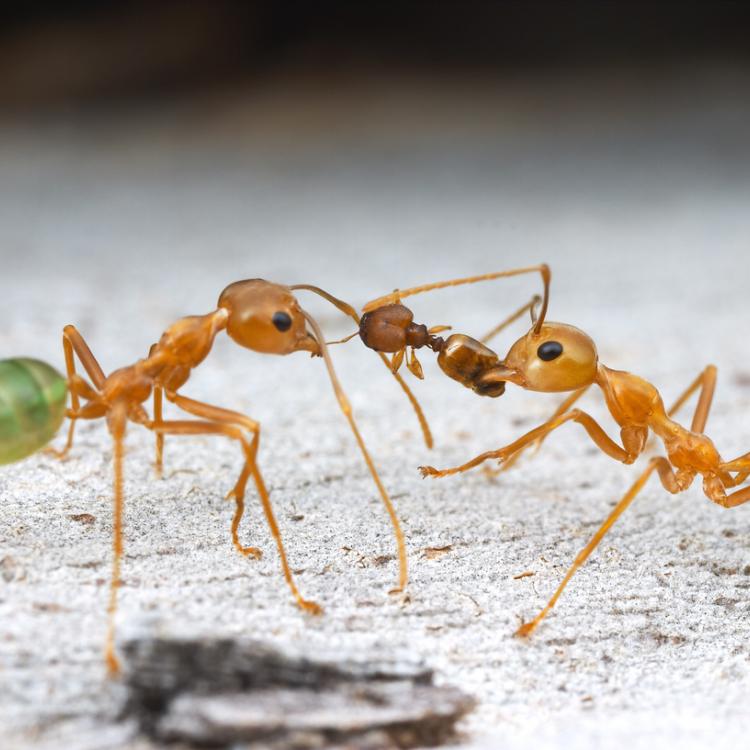
Computational Modelling of Collective Decision Making
Our research group tries to decipher the rules that govern decision making in socially living animal groups.
One particularly important type of collective decision making is task allocation: how does a group allocate individuals to different tasks so that the goals of the groups are achieved. Many groups self-organise without a central controller to achieve this: group-level behaviour emerges from the actions of independent acting individuals, who only have limited, locally information on what is going on.
Supervisor: Prof Bernd Meyer
Indoor Data Management
A large part of modern life is lived indoors such as in homes, offices, shopping malls, universities, libraries and airports. However, almost all of the existing location-based services (LBS) have been designed only for outdoor space. This is mainly because the global positioning system (GPS) and other positioning technologies cannot accurately identify the locations in indoor venues.
Supervisor: Prof Aamir Cheema
Deep learning from less human supervision
Although deep learning has produces state of the art results on many problems, it is a data hungry technology requiring a lot of human supervision in the form of annotated data. Potential PhD topic include learning to learn and meta-learning, active learning, semi-supervised learning, multi-task learning, transfer learning, and learning representations for NLP. Techniques include deep generative models (eg auto-encoders and generative adversarial networks) and reinforcement/imitation learning algorithms for Markov Decision Processes.
Supervisor: Assoc Professor Reza Haffari
Location-based Social Networks
This project aims to design effective and intelligent search techniques for large scale social network data. The project expects to advance existing social network search systems in three unique aspects: utilizing the geographical locations of queries and social network data to provide more relevant results; acknowledging and handling inherent uncertainties in the data; and exploiting knowledge graphs to produce intelligent search results. Expected outcomes of this project include a next-generation social network search system and enhanced international collaborations.
Supervisor: Prof Aamir Cheema