
Empirical studies in Information Visualisation research have become more commonplace in the past two to three decades. While formerly the research focus was primarily on utilising the power of novel technologies for presenting data and information in innovative ways, perspectives have changed over time so that evaluating the worth of visualisations (for user, for task, for context) is now considered a crucial stage of the research process.
Research projects in Information Technology
Displaying 21 - 30 of 45 projects.

Social, Political, Economic Studies of Technology and FIRE (Finance, Insurance, Real Estate)
This research project is part of a DECRA fellowship funded by the Australian Research Council for a project titled, Everyday Insurtech: Impacts of Emerging Technology for Insurance. The fellowship will study the development, adoption, and implications of digital technology and insurance—such as tools for capturing individualised data about behavioural risk factors and automating enforcement of policy conditions.
Supervisor: Dr Jathan Sadowski
STEM Making for all: including people with a disability
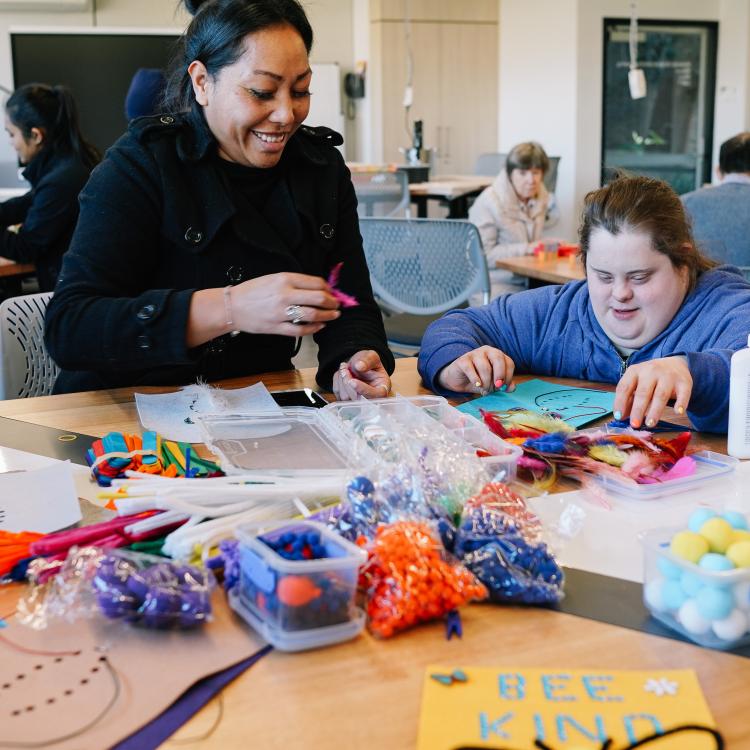
People with disabilities are excluded from the assistive technology creation process because the methods and tools that are used are inaccessible. This leads to missed opportunities to create more accessible technologies for everyone including assistive technologies. This project will engage people with disabilities in the technology creation process at many levels, from engagement activities, input into designs and creation of technology and the facilitation of independent making of assistive technologies.
Supervisor: Dr Kirsten Ellis

Developing and evaluating educational chatbot to support self-regulated learning
Human Centred AI
The project involves design, implementation and evaluation of rule-based chatbot to support students when they study information from multiple texts, e.g., reading a few articles about global warming. The bot will support students' self-regulated learning skills which were theorised to promote learning achievements and boost motivation.
This research will unfold over the following 3 phases:
1. Reviewing the literature on self-regulated learning and creating a set of responses from the bot
2. Developing rule-based chatbot
Supervisor: Dr Mladen Rakovic

Closing the feedback loop in education and workplace
Student satisfaction with feedback is consistently low in higher education, and there is a lack of understanding regarding how students interpret and interact with feedback. Beyond the formal education context, feedback continues to play an important role in shaping individuals' performance in workplace and lifelong learning.
Supervisor: Yi-Shan Tsai
Scholarship for Monash Assistive Technology & Society (MATS) Centre
The Monash Assistive Technology and Society (MATS) Centre helps people living with disabilities to lead self-directed lives. Emerging assistive technologies have the potential to break down many of the barriers that people with disabilities face at school, university, work and in the social sphere. Our work is guided by on-the-ground partnerships with the community to ensure we’re addressing real problems faced by real people and creating a lasting impact. Join us and help to create a world that is more inclusive and equitable.
Supervisor: Prof Kim Marriott
Mixed-Reality Human-Machine Symbiosis for Maintenance Tasks in Physically Embedded Workflows
This project will explore the use of Mixed-Reality (MR) headset technology to support people in performing maintenance tasks in complex environments, where the nature of the work involves close inspection of and interaction with mechanical devices. Examples might include aircraft maintenance or other complex workshop environments. We term work in such situations as "physically embedded" in that the nature of the workflow and the information and data associated with the work is closely tied to the physical machinery. Such maintenance support requires providing the worker with timely and…
Supervisor: Prof Tim Dwyer
VR as Cultural Practice
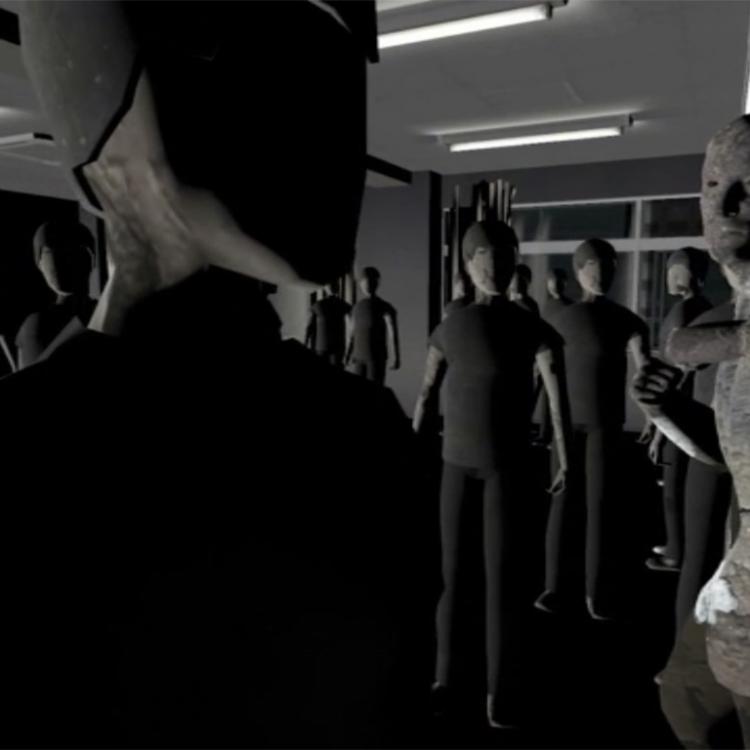
Contemporary filmmakers and visual artists alike are embracing the potential of immersive digital technology – such as Augmented and Virtual Reality – to tell stories in powerful, new and affective ways. By effectively breaking the dictatorship of the frame that has defined the representational form of the moving image for the past 150 years, VR introduces a new paradigm for cinematic expression and viewing experience. This challenge marks a transformational moment in the evolution in the craft of “immersive storytelling”.
Supervisor: Prof Jon McCormack

The Multisensory Museum
Museums are – and have always been – mixed reality spaces par excellence. Today, digital technologies extend the ways in which the wealth of material culture they contain can be interpreted and exhibited, presenting new and (previously) unimaginable ways of bringing their stories to life.
Supervisor: Prof Jon McCormack
AI as Cultural Practice
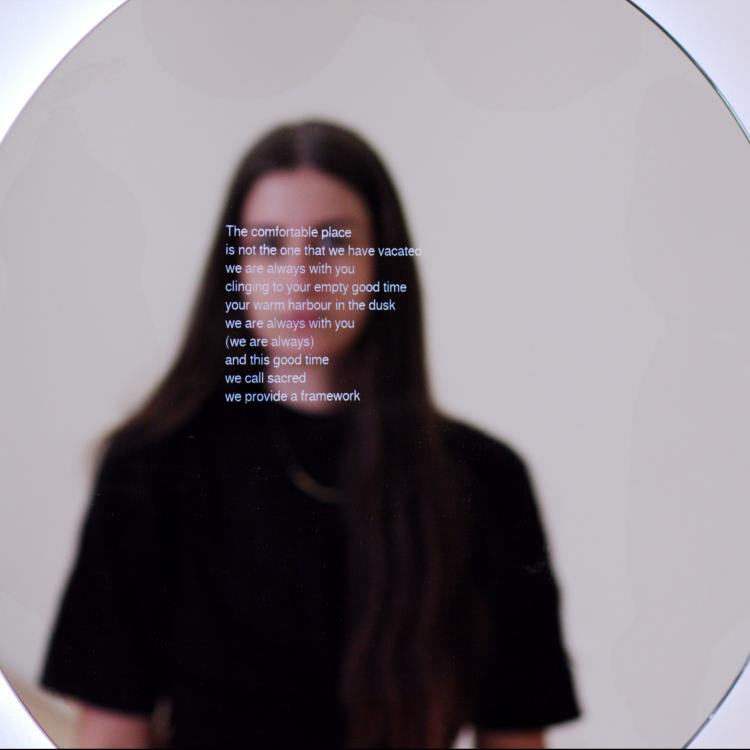
Technologies emerge from a society’s cultural imagination, sparking new ways to imagine the future. Today, Artificial Intelligence (AI) – as the technical capability of a system ‘to correctly interpret external data, to learn from such data, and to use those learnings to achieve specific goals and tasks through flexible adaptation’ [1] – is formed into virtually any digital system that we draw upon to interact with each other and the world around us.
Supervisor: Prof Jon McCormack