
This project is similar in flavour to the Conscious AI project but rather than come from a Philosophical/Neuroscience/Math/Theory angle, this project aims to build self-aware neural networks that are constructed in a way that is inspired by what we know about self-awareness circuits in the brain and the field of self-aware computing. The project will advanced state of the art AI for NLP or vision or both and embed self-awareness modules within these systems.
Research projects in Information Technology
Displaying 101 - 110 of 220 projects.

Living AI
In collaboration with people from Monash materials engineering, neuroscience and biochemistry we are developing living AI networks where neurons in a dish are grown to form biological neural networks that can be trained to do machine learning and AI tasks in a similar way to artificial neural networks. In this project you will develop machine learning theory that is consistent with the learning that occurs within these biological neural networks, so that these networks can be leveraged for AI applications.
Supervisor: Dr Levin Kuhlmann
Explainable AI (XAI) as Model Reconciliation
Creating efficient and beneficial user agent interaction is a challenging problem. Challenges include improving performance and trust and reducing over and under reliance. We investigate the development of Explainable AI Systems that can provide explanations of AI agent decisions to human users. Past work on plan explanations primarily focused on explaining the correctness and validity of plans.
Supervisor: Dr Mor Vered
Explainable AI (XAI) for Disobedient Robotics
As humans we have the ability, and even the necessity of distinguishing between orders that are ethical, safe and necessary and orders that may be harmful or unethical. Theoretically this ability should exist in robots. To coin Assimov’s second law “A robot must obey orders given by human beings except where such orders would conflict with the First Law '', the first law being not injuring or allowing any human to be injured.
Supervisor: Dr Mor Vered
Conscious AI
What makes a machine conscious? This PhD would be at the intersection of Philosophy, AI and neuroscience. You would study the latest neuroscience based theories about how consciousness emerges in the brain, as well as the latest AI methods and examine what if any consciousness current AI methods might have and how we might define whether an AI is conscious based on what we know about consciousness in the brain. This wouldn't be a typical machine learning PhD, as many aspects can only be examined on a philosophical and theoretical level.
Supervisor: Dr Levin Kuhlmann
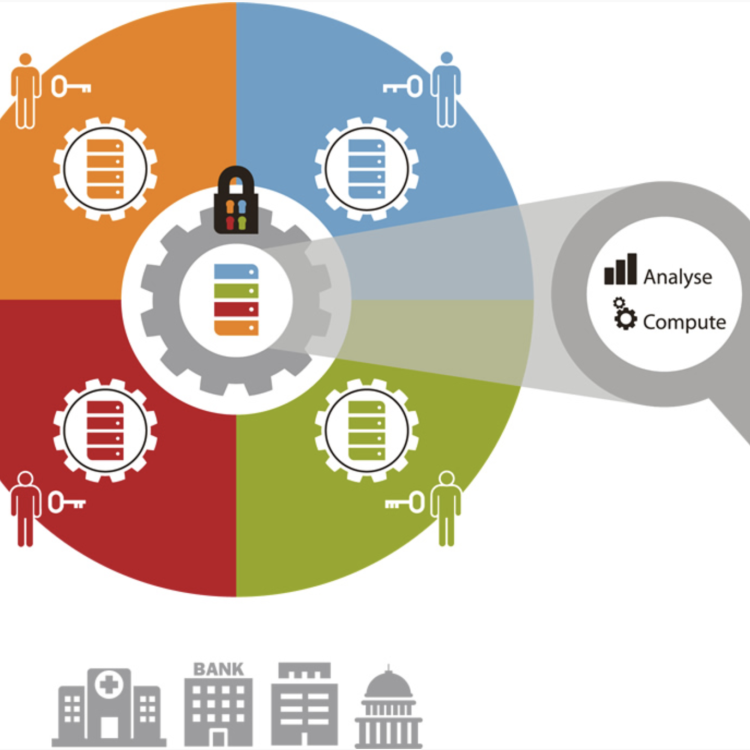
Enhancing Privacy Preservation in Machine Learning
This research project aims to address the critical need for privacy-enhancing techniques in machine learning (ML) applications, particularly in scenarios involving sensitive or confidential data. With the widespread adoption of ML algorithms for data analysis and decision-making, preserving the privacy of individuals' data has become a paramount concern.
Supervisor: Dr Hui Cui
Generative AI for Recommender Systems
A recommender system is a subclass of information filtering/retrieval system that provides suggestions for items that are most pertinent to a particular user without an explicit query. Recommender systems have become particularly useful in this information overload era and have played an essential role in many industries including Medical/Health, E-Commerce, Retail, Media, Banking, Telecom and Utilities (e.g., Amazon, Netflix, Spotify, Linkedin etc).
Supervisor: Teresa Wang
Automate Scientific Discovery for Mental Health Support
This project aims to combine causal analysis, large language models (LLMs), and multi-agent reasoning to accelerate scientific discovery in mental health support. Modern psychiatry and clinical psychology generate vast volumes of heterogeneous evidence, from electronic health records and therapy transcripts to randomised controlled trials and the rapidly growing biomedical literature, yet the pace at which clinicians can synthesise this evidence, identify causal risk factors, and translate findings into practice remains limited.
Supervisor: Dr Lizhen Qu

Bayesian-network models for human-machine collaboration to protect pollinator-plant interactions in agriculture and natural ecosystems
Ecological systems are dynamic and complex. Many ecosystems support human food production and in turn are impacted by human food production activity. This creates feedback loops between ecosystems, human society and our agriculture, that are typical of complex systems. Ecosystem and social system modelling therefore, including simulation, can play a key role to understand food production and ecosystem interactions.
Supervisor: Prof Alan Dorin
Formal Explainability in Artificial Intelligence
Artificial Intelligence (AI) models are widely used in decision making procedures in many real-world applications across important areas such as finance, healthcare, education, and safety critical systems. The fast growth, practical achievements and the overall success of modern approaches to AI guarantees that machine learning AI approaches will prevail as a generic computing paradigm, and will find an ever growing range of practical applications, many of which will have to do with various aspects of humans' lives including privacy and safety.
Supervisor: Alexey Ignatiev