

Insects are vital components of natural and agricultural ecosystems that interact with plants in complex ways. Computer simulations can help us understand these interactions to improve crop production, and to assist us to sustain our natural ecosystems as we change the Earth's climate. This technology is vital to inform our strategies to protect global food supplies and manage our national parks and forests.
Research projects in Information Technology
Displaying 121 - 129 of 129 projects.

Social network sites as a source of ecological data
This project builds on research in which geo-tagged social network site images are used to determine insect and flowering plant distributions on a continent-wide scale. This work was awarded an "AI for Earth" grant by Microsoft, one of only 6 projects in Australia to receive this recognition.
Supervisor: Prof Alan Dorin

Online algorithm configuration in Mixed-Integer Programming solvers
Mixed-Integer Programming (MIP) solvers are very powerful tools to solve combinatorial problems that arise in many industries. Modern MIP solvers usually run a sequence of algorithms to solve the input instance: first it preprocesses the instance, then it solves its Linear Programming relaxation, runs cutting plane algorithms, primal heuristics, then the branch-and-bound. How much time is devoted to each of these types of algorithms is decided online, but once the next stage of solving has started, there is no turning back.
Supervisor: Dr Pierre Le Bodic
Discrete Optimisation for Multi-Agent Path Finding
The Multi-Agent Path Finding (MAPF) is a combinatorial problem in which agents must find a path from a start to a goal location without colliding with each other. The optimisation group at Monash is leading research in this area and has designed some of the most efficient methods to solve MAPF. Companies like Amazon have funded the optimisation group at Monash to do research on MAPF as it relies on this technology for its automated warehouses and fulfilment centres.
Supervisor: Dr Pierre Le Bodic
Computational Models for Complex Social Dilemmas
The most challenging problems of our time are social dilemmas. Thes are situations where individuals are incentivised to free ride on others, but successful group outcomes depend on everyone’s contributions. Examples include, climate change action or compliance with non-pharmaceutical interventions in a large-scale pandemic. In both cases, individuals can rely on others doing their share, but when everyone adopts such a free-riding strategy the public good collapses [1].
Supervisor: Assoc Prof Julian Garcia Gallego
Deep learning from less human supervision
Although deep learning has produces state of the art results on many problems, it is a data hungry technology requiring a lot of human supervision in the form of annotated data. Potential PhD topic include learning to learn and meta-learning, active learning, semi-supervised learning, multi-task learning, transfer learning, and learning representations for NLP. Techniques include deep generative models (eg auto-encoders and generative adversarial networks) and reinforcement/imitation learning algorithms for Markov Decision Processes.
Supervisor: Assoc Professor Reza Haffari
Computational Modelling of Collective Decision Making
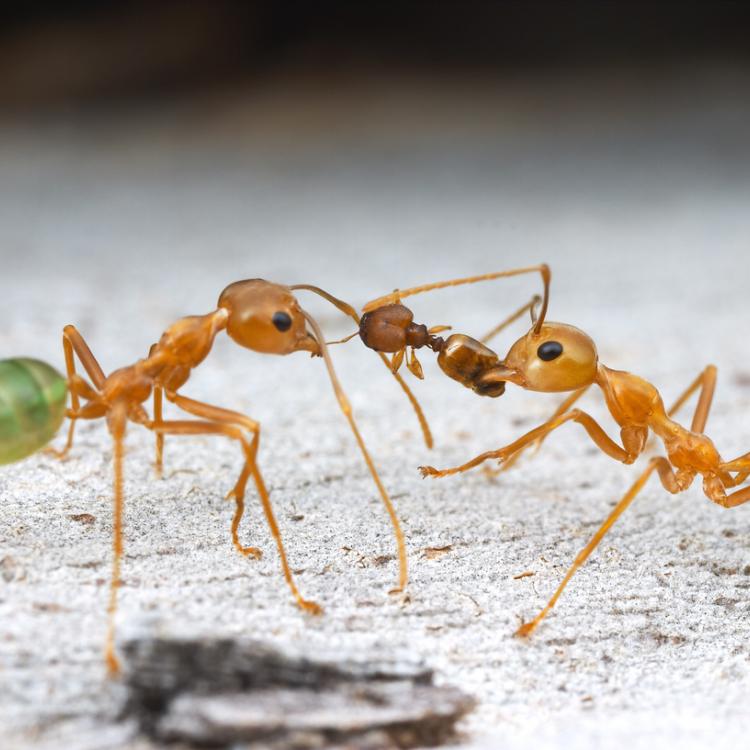
Our research group tries to decipher the rules that govern decision making in socially living animal groups.
One particularly important type of collective decision making is task allocation: how does a group allocate individuals to different tasks so that the goals of the groups are achieved. Many groups self-organise without a central controller to achieve this: group-level behaviour emerges from the actions of independent acting individuals, who only have limited, locally information on what is going on.
Supervisor: Prof Bernd Meyer

Ecosystem Monitoring using Deep Learning
This is an umbrella project that develops methods to monitor animals and more broadly biodiversity in natural environments. It focuses predominantly on acoustic methods but data fusion with visual and abiotic sensors is also considered. This is part of of our broader initiative in the Environmental Informatics Hub to develop the technologies that are required to effectively support conservation and biodiversity research.
Supervisor: Prof Bernd Meyer
Neural Machine Translation for Low-Resource Languages
The proposed project aims to develop new methodologies for developing NMT systems between extremely low-resource languages and English. Recent advances in neural machine translation (NMT) are a significant step forward in machine translation capabilities. However, "NMT systems have a steeper learning curve with respect to the amount of training data, resulting in worse quality in low-resource settings".
Supervisor: Assoc Professor Reza Haffari