
Street-Level Environment Recognition On Moving Resource-Constrained Devices
Research projects in Information Technology
Displaying 71 - 80 of 220 projects.

Street-Level Environment Recognition On Moving Resource-Constrained Devices
Supervisor: Prof Aamir Cheema
Explainability and Compact representation of K-MDPs
Markov Decision Processes (MDPs) are frameworks used to model decision-making in situations where outcomes are partly random and partly under the control of a decision maker. While small MDPs are inherently interpretable for people, MDPs with thousands of states are difficult to understand by humans. The K-MDP problem is the problem of finding the best MDP with, at most, K states by leveraging state abstraction approaches to aggregate states into sub-groups. The aim of this project is to measure and improve the interpretability of K-MDP approaches using state-of-the-art XAI approaches.
Supervisor: Dr Mor Vered
Creating a 21st Century Helpline for Enhanced Support and Continuity of Care
Turning Point is a renowned addiction treatment and research centre specialising in the prevention, treatment, and support services for individuals affected by substance use disorders, gambling addiction, and mental health issues. Turning Point operates a network of 26 helplines across the country, ensuring accessible and immediate support for individuals in need. These helplines serve as a vital resource for individuals seeking assistance, information, and guidance related to addiction and mental health concerns.
Supervisor: Dr Levin Kuhlmann
Formally Verified Automated Reasoning in Non-Classical Logics
Classical propositional logic (CPL) captures our basic understanding of the linguistic connectives “and”, “or” and “not”. It also provides a very good basis for digital circuits. But it does not account for more sophisticated linguistic notions such as “always”, “possibly”, “believed” or “knows”. Philosophers therefore invented many different non-classical logics which extend CPL with further operators for these notions.
Supervisor: Prof Rajeev Gore
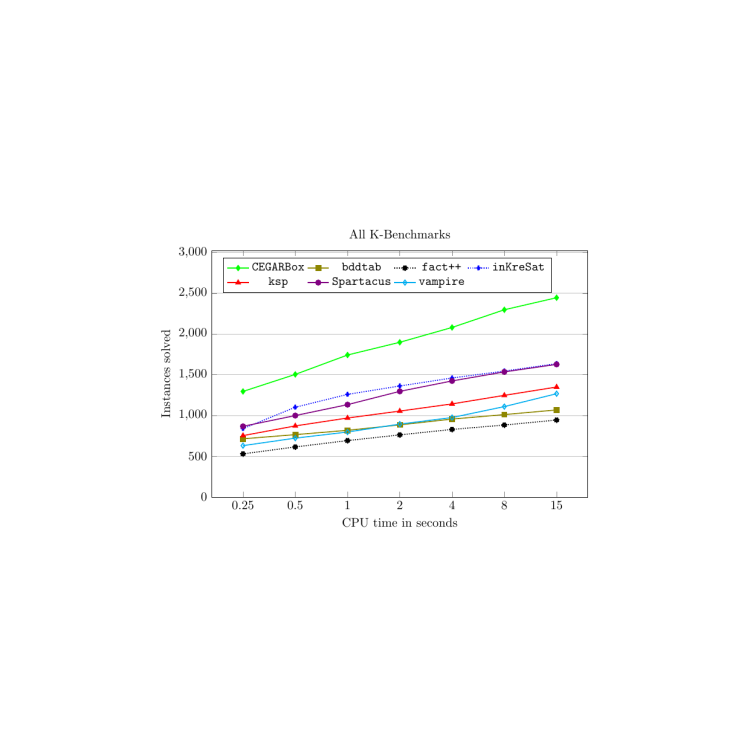
Efficient CEGAR-tableaux for Non-classical Logics
Classical propositional logic (CPL) captures our basic understanding of the linguistic connectives “and”, “or” and “not”. It also provides a very good basis for digital circuits. But it does not account for more sophisticated linguistic notions such as “always”, “possibly”, “believed” or “knows”. Philosophers therefore invented many different non-classical logics which extend CPL with further operators for these notions.
Supervisor: Prof Rajeev Gore

NeuroDistSys (NDS): Optimized Distributed Training and Inference on Large-Scale Distributed Systems
In NeuroDistSys (NDS): Optimized Distributed Training and Inference on Large-Scale Distributed Systems, we aim to design and implement cutting-edge techniques to optimize the training and inference of Machine Learning (ML) models across large-scale distributed systems. Leveraging advanced AI and distributed computing strategies, this project focuses on deploying ML models on real-world distributed infrastructures, improving system performance, scalability, and efficiency by optimizing resource usage (e.g., GPUs, CPUs, energy consumption).
Supervisor: Dr Mohammad Goudarzi
Autonomous Vehicles for Urban Transit Optimisation
Public transportation is vital for sustainable urban mobility, yet challenges like inefficient first- and last-mile connectivity, and over-reliance on private cars hinder its effectiveness. Autonomous vehicles (AVs) offer transformative potential by enabling diverse, on-demand mobility solutions tailored to specific trip needs, enhancing connectivity, and reducing emissions. However, current research often overlooks the complexities of mixed-vehicle environments, and the development of optimal deployment, routing, and charging strategies.
Supervisor: Dr Mohammed Eunus Ali
A Framework for Automated Code Generation and Data Transformation Using LLMs
Automating code generation, SQL query formulation, and data preprocessing pipelines is a crucial step toward intelligent and efficient software development. This project aims to leverage large language models (LLMs) to address these challenges by developing a comprehensive framework that seamlessly integrates LLM capabilities for generating accurate and optimised code, constructing complex SQL queries, and automating data transformations.
Supervisor: Dr Mohammed Eunus Ali
Navigating the Future: Foundation Models for Spatial and Temporal Reasoning
Recent advancements in foundation models have significantly improved AI systems' capabilities in autonomous tool usage and complex reasoning. However, their potential for location-based and map-driven reasoning—crucial for optimising navigation, resource discovery, and logistics—remains underexplored. This project aims to address key challenges in this domain, including interpreting complex map visuals, performing spatial and temporal reasoning, and managing multi-step decision-making tasks.
Supervisor: Dr Mohammed Eunus Ali
[Malaysia] - AI for MRI Reconstruction
Artificial Intelligence (AI) is revolutionizing the field of Magnetic Resonance Imaging (MRI) by enabling faster, more accurate, and cost-effective image reconstruction. This project explores cutting-edge AI methodologies, focusing on combining data-driven approaches with physics-informed models to tackle challenges in MRI reconstruction. By integrating MRI acquisition physics directly into neural networks, we aim to improve the interpretability and robustness of reconstruction techniques.
Supervisor: Dr Fuad Noman