
People with disabilities are excluded from the assistive technology creation process because the methods and tools that are used are inaccessible. This leads to missed opportunities to create more accessible technologies for everyone including assistive technologies. This project will engage people with disabilities in the technology creation process at many levels, from engagement activities, input into designs and creation of technology and the facilitation of independent making of assistive technologies.
Research projects in Information Technology
Displaying 121 - 130 of 212 projects.
Science as a public good: improving how we do research with game theory and computation
Science is a public good. The benefits of knowledge are or should be available to everyone, but the way this knowledge is produce often responds to individual incentives [1]. Scientist are not only cooperating with each other, but in many cases competing for individual gains. This structure may not always work for the benefit of science.
Privacy-Preserving Machine Learning
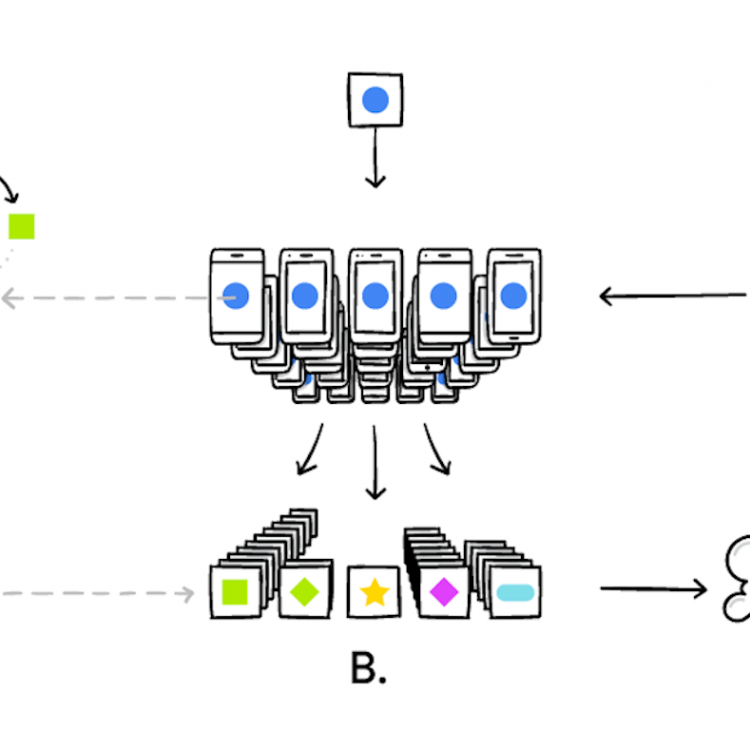
With success stories ranging from speech recognition to self-driving cars, machine learning (ML) has been one of the most impactful areas of computer science. ML’s versatility stems from the wealth of techniques it offers, making ML seem an excellent tool for any task that involves building a model from data. Nevertheless, ML makes an implicit overarching assumption that severely limits its applicability to a broad class of critical domains: the data owner is willing to disclose the data to the model builder/holder.
Learning from massive amounts of EEG data
The existing deep learning based time series classification (TSC) algorithms have some success in multivariate time series, their accuracy is not high when we apply them on brain EEG time series (65-70%). This is because there is a large variation between EEG data of different subjects, so a TSC model cannot generalise on unseen subjects well. In this research project we investigate self-supervised contrastive learning to encode the EEG data. This way we can better model the distribution of our EEG data before classifying it to different mental status. See a recent work here [1].
A Smart Software Vulnerability Detection Platform
Identifying vulnerabilities in real-world applications is challenging. Currently, static analysis tools are concerned with false positives; runtime detection tools are free of false positives but inefficient to achieve a full spectrum examination. A generic, scalable and effective vulnerability detection platform, taking advantage of both static and dynamic techniques, is desirable. To further overcome the shortcomings of these techniques, deep learning is more and more involved in static vulnerability localization and improving fuzzing efficiency.
Towards secure and trustworthy deep learning systems
Over the past decades, we have witnessed the emergence and rapid development of deep learning. DL has been successfully deployed in many real-life applications, including face recognition, automatic speech recognition, and autonomous driving, etc. However, due to the intrinsic vulnerability and the lack of rigorous verification, DL systems suffer from quality and security issues, such as the Alexa/Siri manipulation and the autonomous car accidents. Developing secure and trustworthy DL systems is challenging, especially given the limited time budget.
Developing and evaluating educational chatbot to support self-regulated learning
The project involves design, implementation and evaluation of rule-based chatbot to support students when they study information from multiple texts, e.g., reading a few articles about global warming. The bot will support students' self-regulated learning skills which were theorised to promote learning achievements and boost motivation.
This research will unfold over the following 3 phases:
1. Reviewing the literature on self-regulated learning and creating a set of responses from the bot
2. Developing rule-based chatbot
Explainable Multi-Agent Path Finding (XMAPF)
The multi-agent path finding problem (MAPF) asks us to find a collision-free plan for a team of moving agents. Such problems appear in many application settings (including robotics, logistics, computer games) and a wide variety of solution methods have been proposed. Once a plan is computed, execution proceeds under the supervision of a human operator who is free to modify and adjust the plan, or even reject it entirely, because of changing operational requirements.
Predicting short- and long-term outcomes of pregnancy to optimise maternal health care (PhD)
As a pregnancy approaches term (the point at which the foetus is considered fully developed), decisions are made about the timing of birth and the way babies are born. These decisions are incredibly challenging for clinicians and pregnant women. Digital health records, advances in big data, machine learning and artificial intelligence methodologies, and novel data visualisation capabilities have opened up opportunities for a dynamic, ‘Learning Health System’ – where data can be harnessed to inform real-time and personalised decision-making.
Understanding material failure by machine learning analysis of pattern strains
Metals are made of small crystals - i.e., atoms are arranged in a particular geometric arrangement, which are typically in the range of a few 10s of microns (0.01 mm). The arrangement of these crystals greatly affects the performance of the metal and hence the performance of components where metals are used - such as in aeroplanes, gas turbine engines, cars, etc. The manner in which such materials deform, crack and fail under a variety of conditions is an important area in terms of cost and safety.